

Locale
One wicked problem. Five expats. A community worth building.
User Interviews
Affinity Mapping
Problem Framing
User Persona
Journey Mapping
Lo-Fi Prototyping
Concept Testing
Usability Testing
Role
UX Researcher
Secondary research, interviews, affinity mapping, journey map, user flow
Team
3 Designers



Sprint
1 week
Deliverable
Lo-fi concept & prototype
The Problem
Loneliness is a wicked problem hiding in plain sight
Loneliness runs through Europe's cities more widely than most people assume. Secondary research kept surfacing three lenses, each a different reason connection is hard to find in a new city.
Place
Where you land changes everything
How connected a newcomer feels depends heavily on the city itself. Its size, its layout, and how transient the population is all shape how easily new ties form.
Culture
Breaking into closed circles
Language gaps and settled social norms can lock newcomers out. Residents already have their circles, so reaching in often feels like one-sided effort.
Tech
Connected but still isolated
The tools built to bring people together often widen the gap instead, trading genuine belonging for low-effort, surface-level contact.
Primary Research
From five interviews to four themes
We interviewed five recently relocated expats and clustered what they shared into an affinity diagram.
Anxious about arriving alone
Worn down by the language barrier
Wants interests, not small talk
A first meeting rarely becomes a friendship
The takeaway
People didn't want to meet someone new. They wanted to share experiences.
The Persona

Sophie
The Uprooted Explorer
31
|
Tech, home office
|
Berlin
|

I want to create deeper connections with people rather than just making friends.
“
“
Sophie relocated from Canada for work. The language barrier keeps most of her conversations on the surface, and her weekends are often spent exploring the city alone.
Goals & Needs
Belong to a real community, not just collect contacts
Meet people through genuinely shared interests
Social situations that feel natural, never performative
What gets in the way
A local culture that feels closed to newcomers
Hesitation to attend events alone
Structured meetups that feel forced and unnatural
The Journey
Sophie's first six months in Berlin
We mapped her first six months to see where the emotional highs and lows fell, and where the right product could change the story.

New friends and a pottery class. Excited to see what comes next.
I wish I could meet new people and make meaningful connections.
Month 1
Arrival
Lands in Berlin, left out at work
Month 2
Settling in
German class, after-work drinks
Month 3
Honeymoon high
A new friend and a weekly pottery class
Month 4
Reality hits
Misses home, struggles to connect
Month 5
The low point
Stuck in a rut, quits pottery
Month 6
A way in
Finds a local English-speaking group
The turning point
Her turnaround was not another one-to-one app, but finding a group in the same situation around a shared interest. Locale exists to make that moment happen on purpose.
The Problem Statement
Defining what to solve
Everything we learned narrowed to a single point of view.
User
Young professional expats
Need
a way to build genuine belonging through shared interests
Because
living in a new culture while unable to fully express yourself makes starting from scratch exhausting.
Ideation
We started with the worst ideas on purpose
The Worst Ideas method forces you past the obvious. As a team we sketched deliberately terrible ideas, then dug for the good idea hiding inside each one.
✕
The homesickness pill
A drug that makes you hallucinate your old neighbourhood and friends.
✕
Twenty-minute flights home
Ultra-fast planes to nip back to your country whenever you miss it.
✕
Speed meeting
Ten seconds to get to know a stranger, then straight onto the next.
✕
Friend tracker
An app that follows people you fancy meeting around the city.
✕
VR homeland
Strap on a headset to feel like you never left home.
✕
Blind friend
Answer three questions and meet a stranger completely sight unseen.
The idea worth keeping
Buried in the jokes was one real insight. Stop forcing one-to-one introductions, and instead gather people around shared interests, then make the first real-world meetup easy. That became Locale.
User Flow
Sophie's path to a real meetup
We mapped the full happy path, including the choice she makes at the home screen, so every screen had a clear job and every route pointed toward meeting someone in person.


Other subjects


Opens the app

Registers, sets
interests and
preferences

Home screen
Opens Community
Browses yoga posts
Reads an event post
Replies to the post
Friend request from
the organiser
Accepts the request
Messages her new
friend
Friend replies
Opens the map to find
her
Heads off, messages on
the way

Meets at the yoga
class
Start
Decision point
Real-world connection
Whichever branch she takes from the home screen, the flow is built to end in the same place: meeting a real person, face to face.
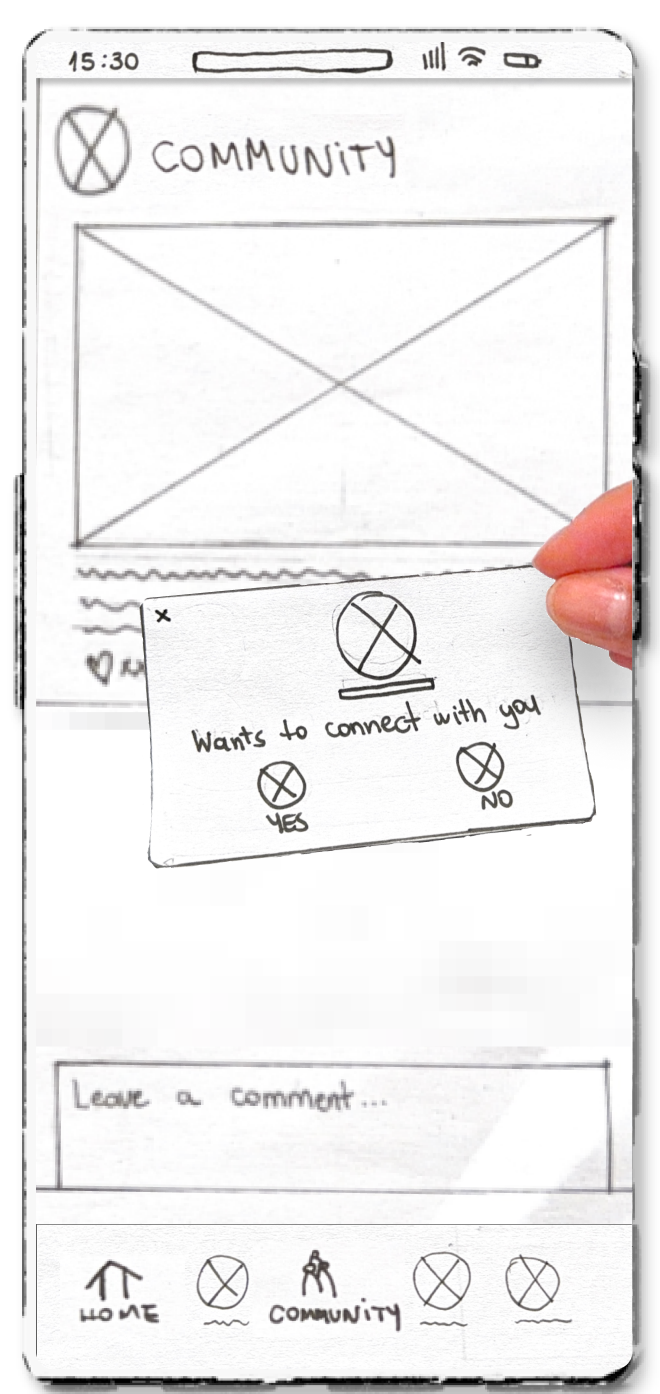
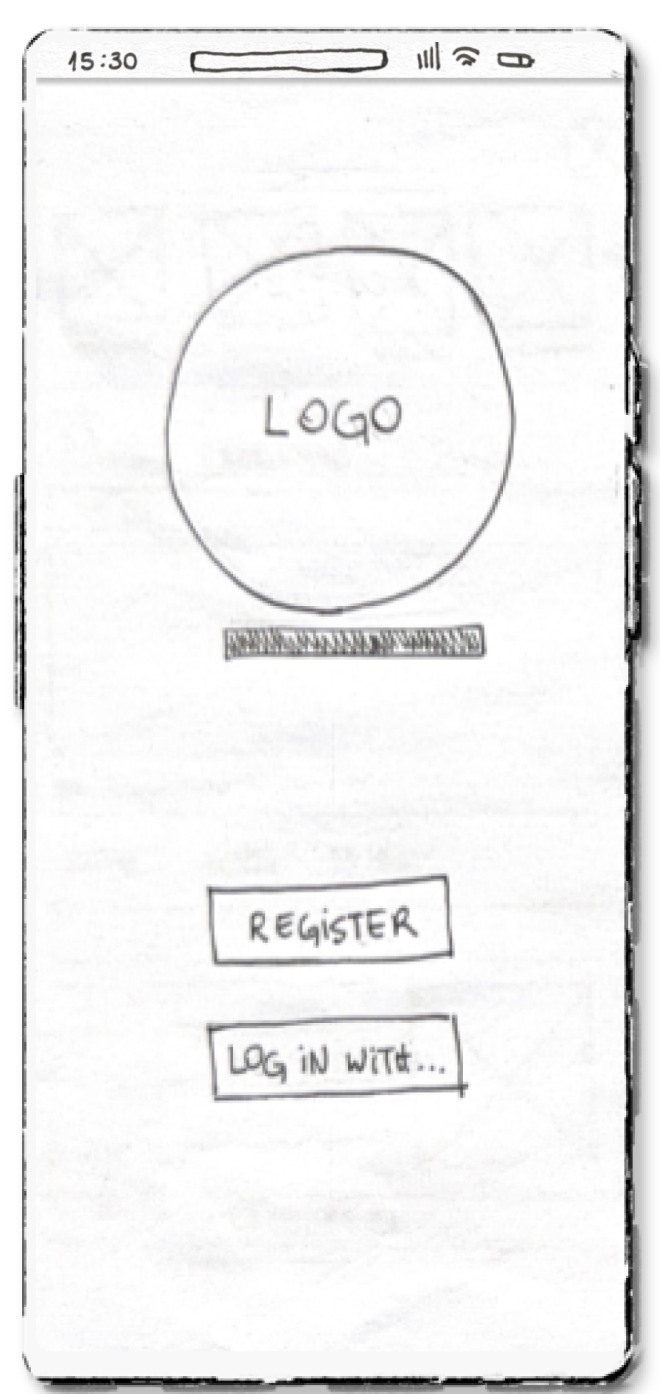
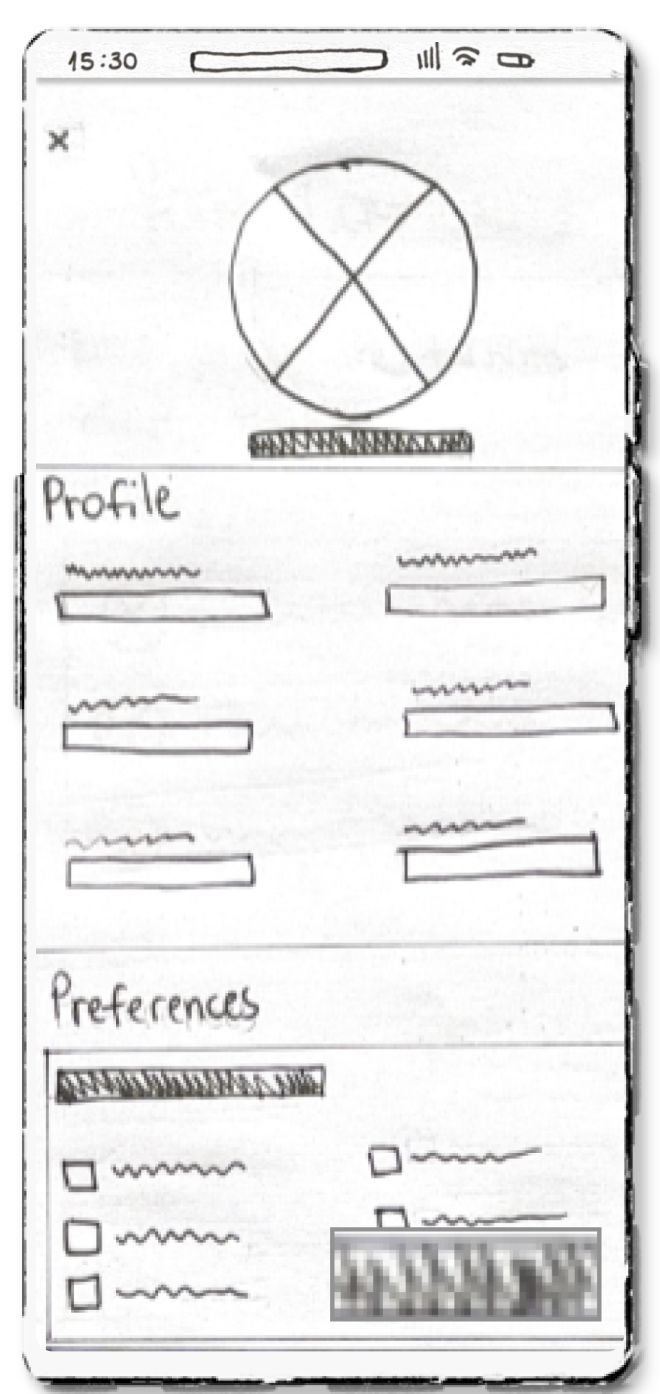
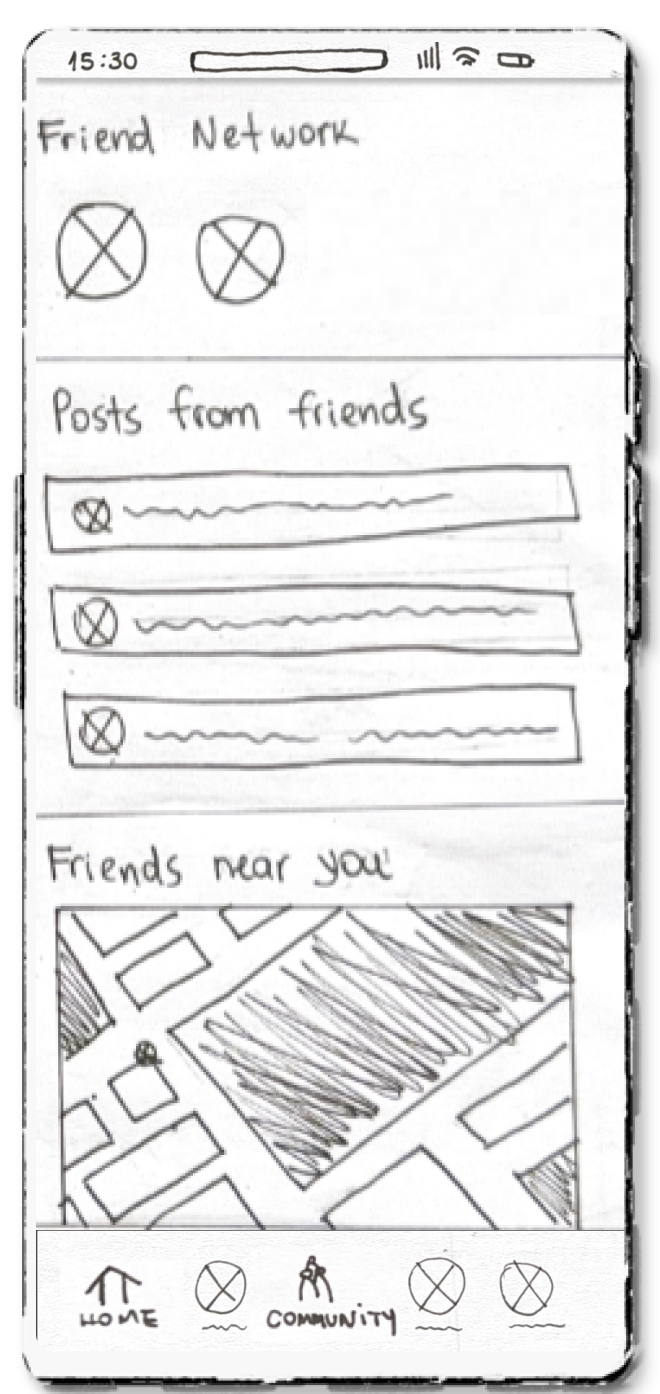
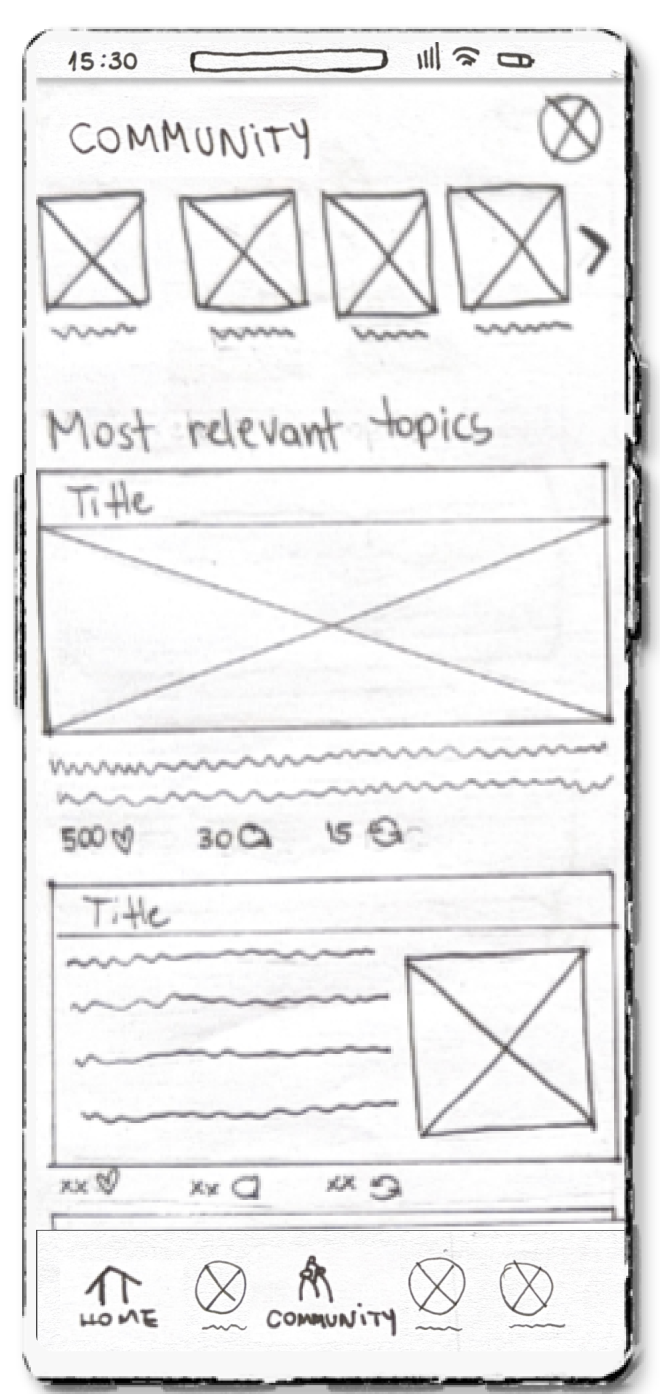
Lo-Fi
We sketched the screens before going near pixels
Staying low fidelity let us move fast and pressure-test the structure of each screen, well ahead of any visual decisions.
The Solution
Locale: your people, through shared interests
Sophie's interests and background are logged from the first screen, so she drops straight into communities that fit. She finds events, connects with like-minded people, and when she is ready, the map makes that first real meetup easy.

Interest-based communities
Topics that match her interests and background, so she joins conversations she actually cares about.
Events worth showing up to
Local events surfaced inside each community, framed around shared interests rather than cold networking.
Messaging that starts naturally
She connects with like-minded people off the back of a post or an event, not a forced one-to-one match.
A map for the first meetup
When both sides are ready, sharing location makes meeting in person low-friction and safe to coordinate.
Concept Testing
We put the concept in front of three users
Early, lightweight testing to learn what resonated and what we still needed to earn before anyone would commit.
3 / 3
could see themselves actually using Locale.
What landed
It felt familiar and easy to use from the first screen
The interest-based communities were the standout draw
What worried them
Sharing location felt premature before any trust was built
They wanted control over who sees where they are, and when
It would be valuable not just for making friends, but for staying informed about what is happening around you.
Tester, unprompted
What's Next
Where we take Locale next
Concept testing gave us a clear list of what to fix before the next, higher-fidelity round.
Concern
Sharing location felt unsafe before trust was built
Plan
Borrow the WhatsApp model: share your current location once, or a live location for a set window that expires on its own. The user stays in control of who sees what, and for how long.
Concern
Onboarding and the home layout confused some testers
Plan
Simplify the first run and the home screen so the path from joining to finding a community is obvious without explanation.
Direction
Move from concept to a polished build
Plan
Fold every piece of feedback into a refined, higher-fidelity version, then test it again with a wider group of recent arrivals.


Locale

Belonging shouldn't come down to luck. Locale makes it something you can find on purpose.
Explore my other projects
View all →




IRO Management Redesign
PlurieBR - IRO Flow
Two weeks. One client. A redesign now in production.
UX / UI Design
B2B SaaS
Cohort
Isolated students. Real connections. Designing a community.
Product Design
EdTech
KetoCups
Building an e-commerce presence from scratch.
Product Design
E-Commerce
Metrix
From zero brand to full digital presence in two weeks.
Product Design
Health Tech